






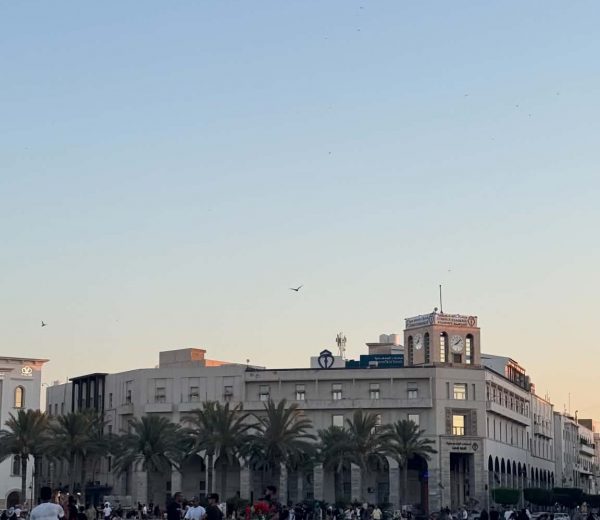
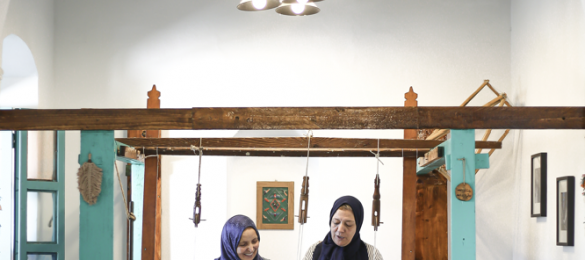

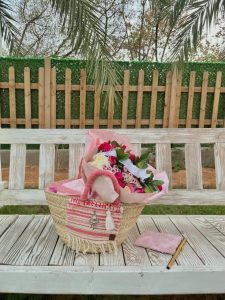
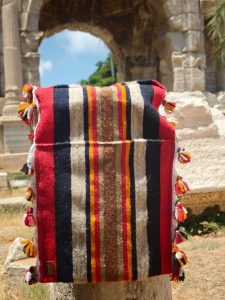
Osto is a store in Tripoli’s old city that specializes in handmade woolen products made with a traditional machine called Nul, a specialized machine in Tripoli. However, it comes in many forms, including ground Nul, Mizdah, and Klim from Misratah. The name “Osto” is derived from the Amazigh word for Al-Jaddad, meaning “weaving threads,” as the crafts include weaving threads in all machines used. Osto’s founders, Zainab Madi and Aisha Madi, hail from Yefren in the Nafusa Mountains of Libya. They were inspired to work with wool after growing up watching their family members create wool products. Osto turned the traditional craft into creative products, not only blankets but also bags, cushions, baskets, and carpets.
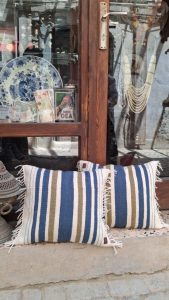
The idea to start the business came by coincidence; both used to do handmade crafts, and once in Yefren, they presented their work at a Bazaar. During a visit to the Bazaar, their friend suggested they check out a store in Tripoli’s old city. After that, they visited the Saboun House, where many crafts were being made, and it provides training and workshops focusing on art and crafts. They met a craftsman called Haj Abdulbaset Tajuri. They asked him to train them to use Nul, which is used for wool but also Silk.
On Challenges & Opportunities for Osto
After three months of training, they decided to take one of the machines and start on their own. After completing their internship, they received an offer to join Saboun House, where they produced their work, and they stayed for nearly a year. The challenge was that the location was unfamiliar and difficult to find. Later, they discovered a store on Ad-dargouth Mosque Street, near Bank of Rome Square. They also sold their products online through their official Instagram and Facebook pages to confirm orders. One of the biggest challenges Mrs. Zainab highlighted is the scarcity of natural wool, especially dyed wool, along with fluctuating foreign currency rates, which negatively affect their work.
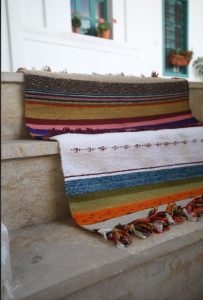
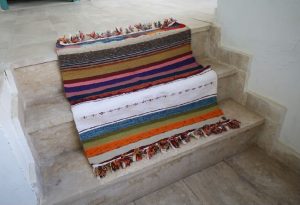
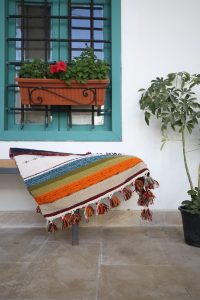
Moreover, this craft requires special maintenance and preservation because they import much of their wool, although they sometimes source it from Libya. At this stage, their store is quite small, as they hope to train people and create job opportunities. Given the high demand, they need more support to help preserve this craft and meet the growing demand. In terms of opportunities, they have received strong support from many individuals and gained recognition. For example, through the Ministry of Tourism, Osto has been invited to participate in many local festivals and bazaars. In addition, they visit other cities around Libya to present their work. Mrs. Zainab underscored the support and encouragement they received from Mr. Maabed Snousi from Libya’s Ministry of Tourism.
Road Ahead & Vision
Their clients include a diverse mix of international visitors, diplomats, and foreign tourists, along with Libyans living abroad. This broad spectrum of support plays a critical role in their business, providing both motivation and encouragement. Many locals deeply appreciate their work, reinforcing the community’s commitment to preserving traditional crafts. Nonetheless, the decision to establish their operations in the old city was never random but rather intentional. The old city of Tripoli is renowned as the capital of crafts, traditional arts, and cultural heritage.
”I would like to stress that we considered Osto as a national project” – Zainab Madi
They celebrate the importance of sourcing raw materials from their authentic origins and encouraging more traditional projects. Looking ahead, they are optimistic about expanding their business. They aim to secure a larger facility within the next five years, which would enable them to further elevate their craftsmanship and impact on the community.
You can check their work in detail via their official pages: Ostolibya and Osto Facebook