
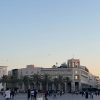


I am back home, away from home, and finally settled in after spending some time in Libya. I finally got the chance to see family and friends. My visit was a bit longer than last year’s visit. It allowed me to spend proper time with family. Especially my grandmother, whom I missed the most after she fell ill last year. I was so excited to go home at last and be fully present. One of my visits this time in Tripoli included a visit to the newly reopened National Museum. I had visited a long time ago in primary and middle school as part of the school visits my school organized.
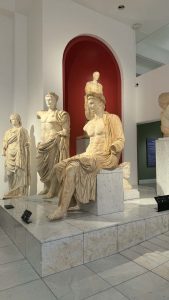
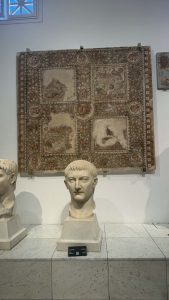
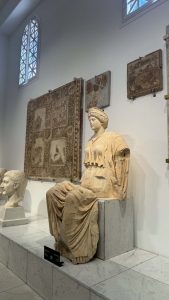
Since then, I haven’t been to the museum, but I remember my school visits vividly as I have always loved anything related to history. I sometimes wonder why I didn’t major in history! Anyhow, it was on my list of places to visit once I go back home. Let me tell you, it exceeded my expectations! The National Museum is beyond incredible and reflects the hard work and effort that went into presenting it the way it is now.
Gate into Libya’s History
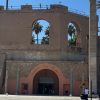
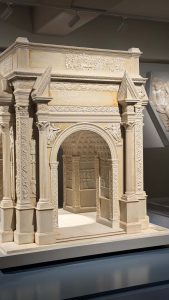 From the Museum’s entrance, you are immediately transported into a different reality. It immerses you directly in Libya’s history through strategic provision of phases. The Museum comprises 4 stories and covers Libya’s history from the Stone Age to the present time. You will go through the pre-history period, then move to a section about the Libyan tribes. After that, the Phoenician era, then the Greek period, and finally the Roman Era in Libya.
As you walk through the Museum, you will pass through sections, or as I call them ”Phases”. For instance, you will reach a section showcasing mummies from Libya. The Mummy of Jaghbub is showcased there, highlighting that Libyan mummies are older than Egyptian mummies, with mummification in Libya dating back 5,600 years. It predates the oldest confirmed mummifications in the Nile Valley by about 800 to 1000 years. Throughout different historical periods, you will notice an upgrade, showing progression in life from the use of more tools to the use of money (in coins), for instance, through the Roman Era.
Authentic Representation of Libya’s Diversity
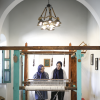
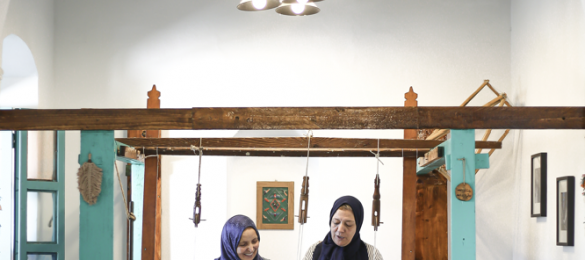
One of my personal favorite sections of the museum is the section called Libyan Attires. It showcases the diverse attires worn in Libya from east to west to south. What struck me personally was the level of detail in showcasing Libyan attire. For example, there are videos of traditional weddings in Tripoli and of the woolmaking craft in the Nafousa Mountains, which features the practice called Mesdah – المسده. I remember clearly from growing up.
When I was young, my grandmother spent her time during summer break in our hometown, Gala’a, making traditional woolen blankets using Mesdah. My grandmother made me a blanket as a gift when I was born, using Mesdah, which I still use to this day. Another aspect I liked was the fourth floor, which covers nature and ecosystem diversity, including both terrestrial and marine ecosystems in Libya.
Libya’s Political Phases
As I was concluding the visit, I passed through the final section, which showcases Libya’s political transformation since independence in 1951 and the rise of the monarchy. Then it highlights only Gaddafi’s overthrow of the monarchy in 1969 and Gaddafi’s regime’s overthrow in 2011. I personally thought the section highlighting political periods in Libya should have included more detail, not just a video timeline.
Even Libya’s political landscape since 2011 is not well presented in the National Museum, where I was hoping to see at least more detailed imagery and videos from the revolution. Nonetheless, I enjoyed the section highlighting Libya’s freedom fighters (Almujahideen – المجاهدين), such as Omar Al-Mukhtar, who fought fiercely against Italian colonization, which features various objects, attire, and documented letters.
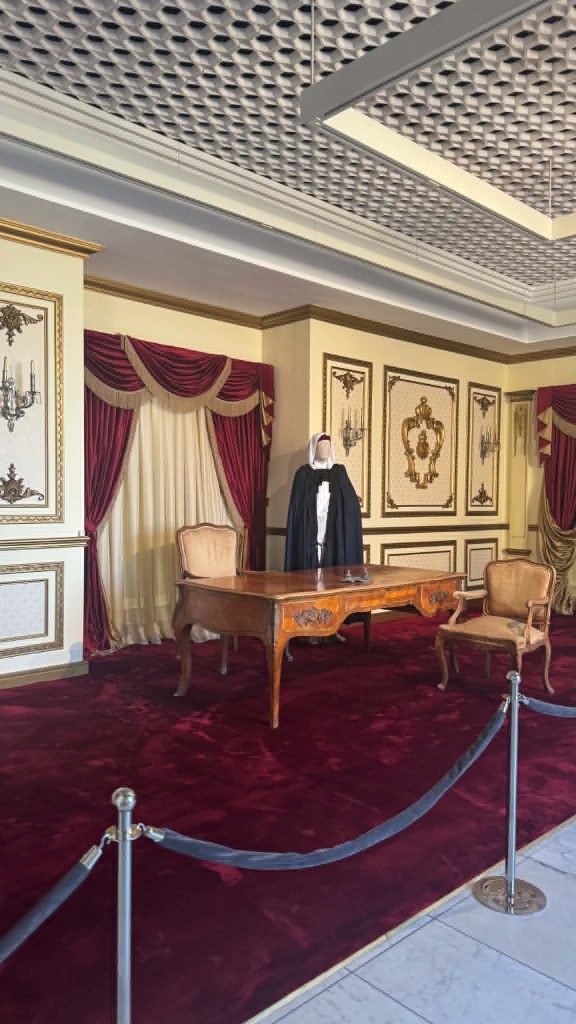
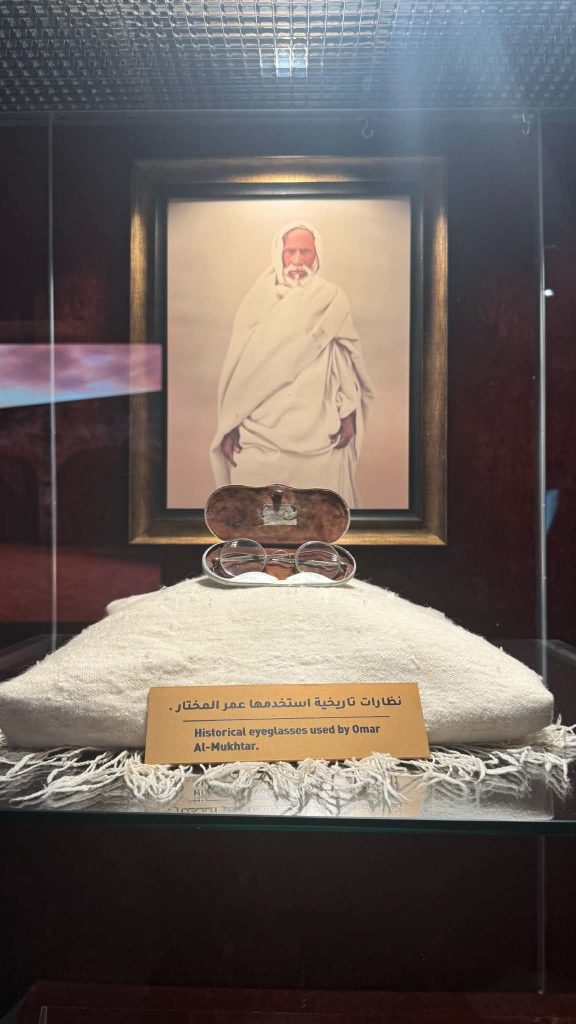
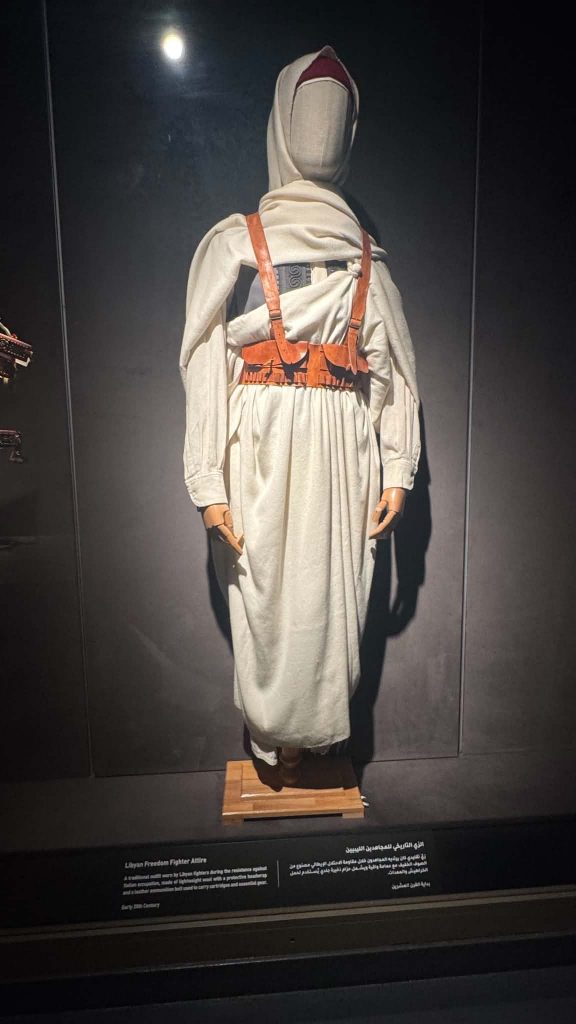
I would like to highlight that I don’t know whether they provide guided visits since I didn’t ask, but each piece and artwork presented has a descriptive text in both English and Arabic underneath it as well as a QR Code that will direct you to the museum’s official website with additional information about it. My visit to Libya’s National Museum was truly an incredible experience, and I enjoyed it a lot. It was nice seeing people from different parts of Libya coming specifically to Tripoli to visit the museum. I highly recommend that, if you are ever in Tripoli, you pay it a visit!