
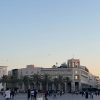



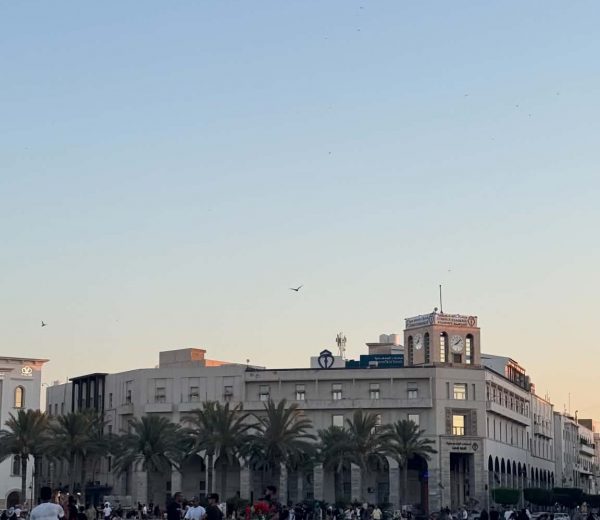

Benghazi, Libya’s second-most-populated city after Tripoli, has faced many challenges throughout history but remains a place known for its diversity, intellectual life, and rich culture and traditions. The city is known for many landmarks that have shaped its urban, social, and landscape structures.
From the city’s Municipal Hall to the well-known Benghazi Lighthouse, the city has a nostalgic, authentic feel; many who have been to Benghazi or are from the city can confirm it. Personally, I have never been to Benghazi, and I hope to visit this city one day. Until then, I hope to cover Benghazi more in future articles. I have always wanted to write this article, but I haven’t decided on my entry point until a few days ago.
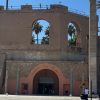
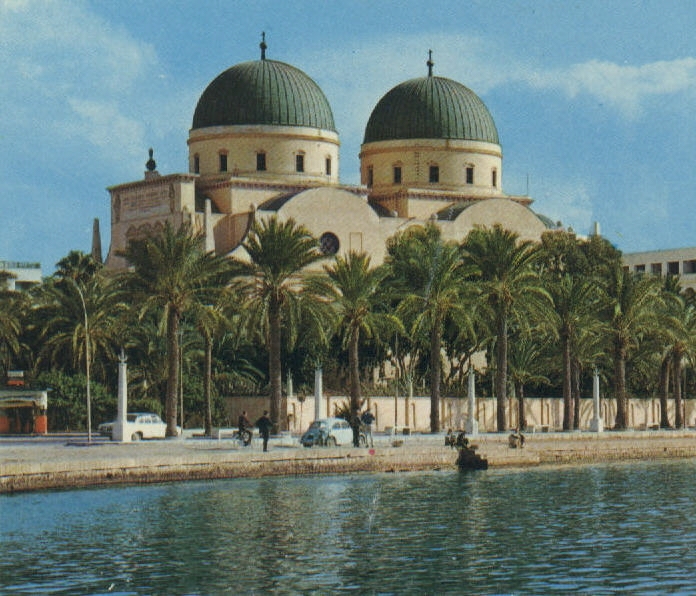
One of Benghazi’s most famous landmarks is the Cathedral, which is hard to miss when you walk by the Cornish. The church, which is now abandoned, was once one of the largest in North Africa. It is a Roman Catholic Church. The cathedral was built between 1929 and 1939 as part of a project by the two Italian architects Ottavio Capiati and Guido Verraza. It was part of the Italian colonization’s urban development planning. The building was also used as the headquarters of the Arab Socialist Union before falling into disrepair.
Since 2009, Benghazi’s Cathedral
Has been undergoing restoration work by an Italian company. However, the process has been postponed until further notice. It’s one of the few remaining examples of Italian colonial architecture with its two gilded domes and Doric columns. As shown in the interior pictures, the entrance to the church features a balcony supported by six Doric columns.
Above, two domes lend an oriental appearance to the structure, while a series of glass panels ensures adequate lighting. This building, inspired by Italian religious architecture, remains incomplete. The original design also included a three-level bell tower, as per numerous sources.
The cathedral sustained significant damage from heavy bombing during World War II, but was later restored and remained operational until it was converted into the headquarters of the Arab Socialist Union in the early 1970s. In 1976, it was destroyed by fire and subsequently closed. It has remained abandoned to this day.