


For the past few years, I have used this platform to highlight artists from my home country and the MENA region. I aimed to shed light on the beauty and creativity of many influential names and those who deserve more recognition. With every encounter and opportunity, I find myself wanting to share the ideas and discussions I had with many artists. Hoping to ignite curiosity and inspiration.
I am grateful that on many occasions, the artistic work, be it abstract, visual, or calligraphy work, introduced me to the artist behind it. Allowing me to ask questions about the ideas they had to produce such work. Unfortunately, some of the artists I highlighted on the blog passed away before I had the chance to meet or speak with them about their work. However, I hope to pay tribute to their artistic influence and heritage through these articles.
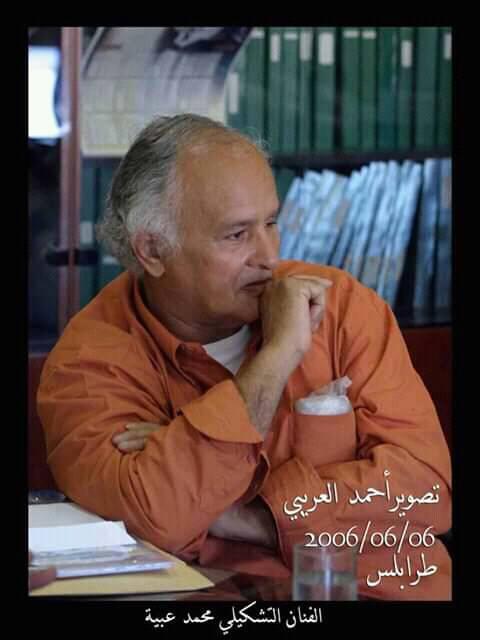
In this article, I want to share valuable information and highlight the work of an important Libyan artist, Mohammed Alaref Abiya, who, through his artwork, conveyed the beauty of Libyan culture and traditions in vibrant colors and abstract lines. He narrated a story of hope, depth, and beauty in Libya. Additionally, he paid attention to the simplest details that make our traditions even more beautiful.
Abiya’s Early Inspirations & Visual Curiosity
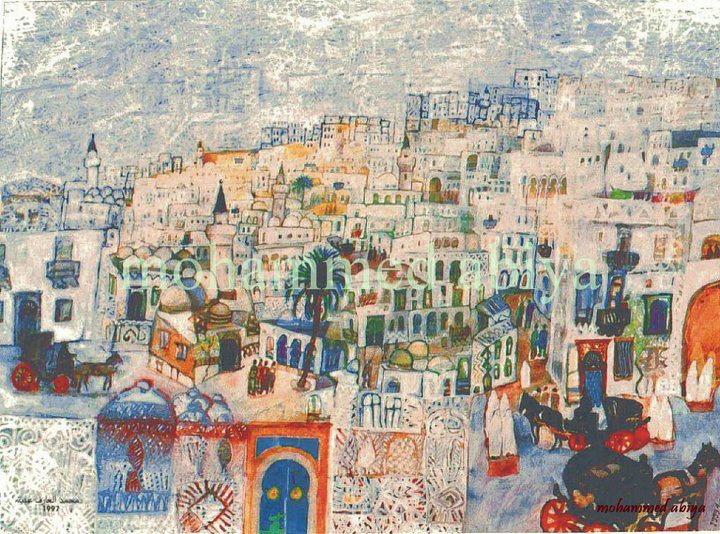
Mohamed Alaref Abiya was one of the most important figures in the Libyan artistic scene. He presented and researched the most significant experiences that shaped a visual language, through drawing the popular visual vocabulary shared by Arabs in general and Libyans in particular, rooted in their visual heritage, which constitutes an integral part of their visual culture.
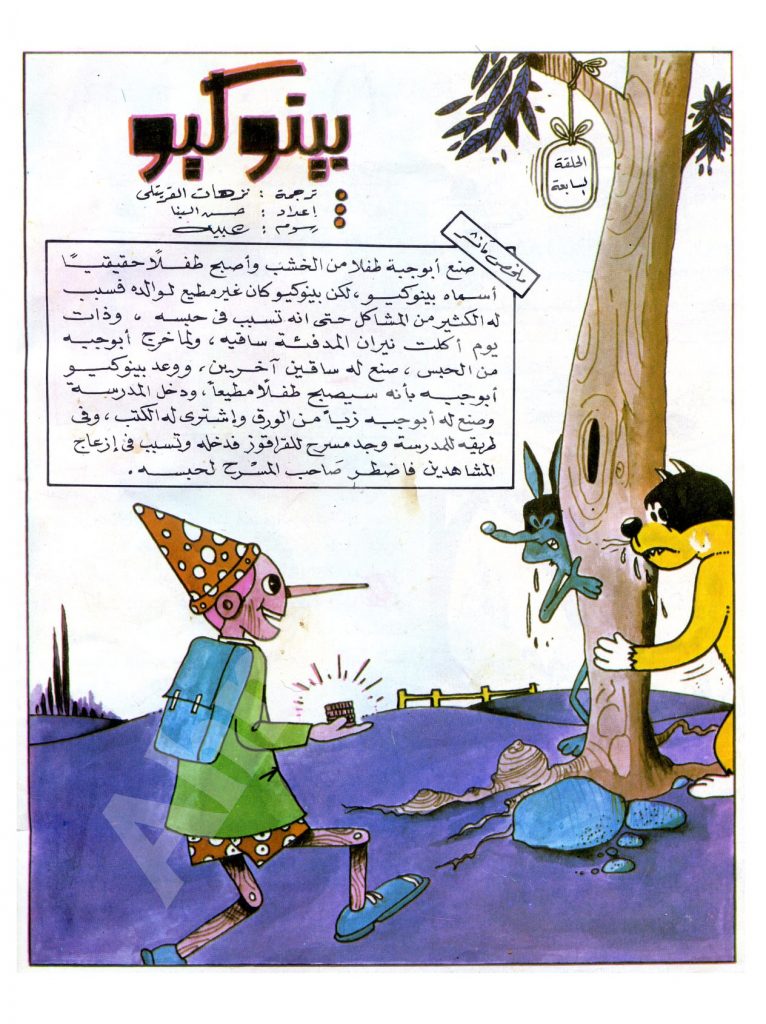
Mohammed Alaref Abiya was born in Tripoli in 1944, and his artistic interests began from a very young age. In the early 1970s, he got the opportunity to work in a local magazine as an illustrator. The magazine was initially issued by the General Press Authority of the Ministry of Information. It was founded by Mrs. Khadija Al-Jahmi and later became editor-in-chief. I managed to find visual stories, such as comics, that he contributed to.
One example is Penoku stories, translated by Nazahat Al-Gritli, developed by Hasan Albanna, and illustrated by Mohammed Alaref Abiya. Through observing the work of Mohammed Abiya, his work was not only limited to caricature and illustrations reflecting. However, he went beyond to paint the beauty of Libya’s details with his brush strokes.
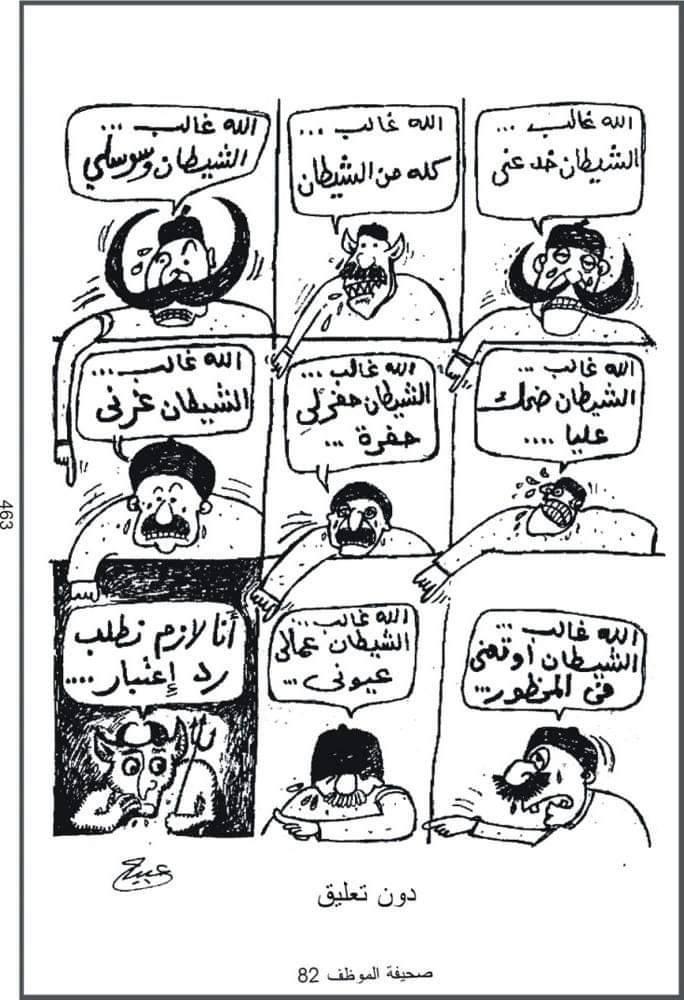
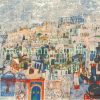
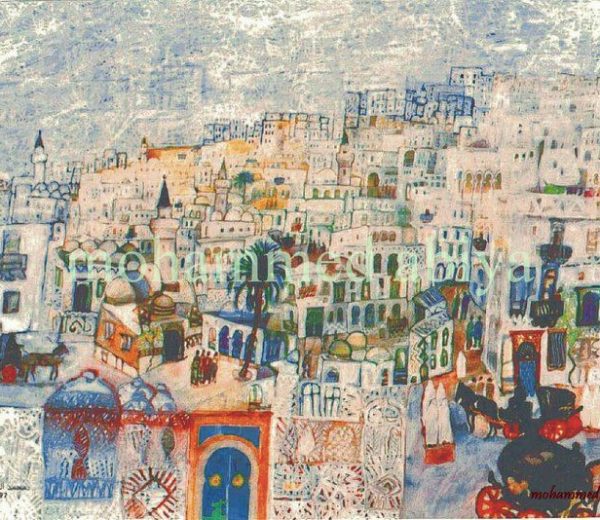
At the beginning of the eighties, Abiya began painting in a colorful style after his artistic production had been known only for satirical drawings. His origin from Tripoli influenced many of his artworks. Reflecting the city’s rich aesthetic heritage, showcasing the colorful, beautiful details. He showed the extent of his attachment to the city, a love you can clearly see and feel through his artwork.
Abiya & Libya’s Beauty Through His Artistic Vision
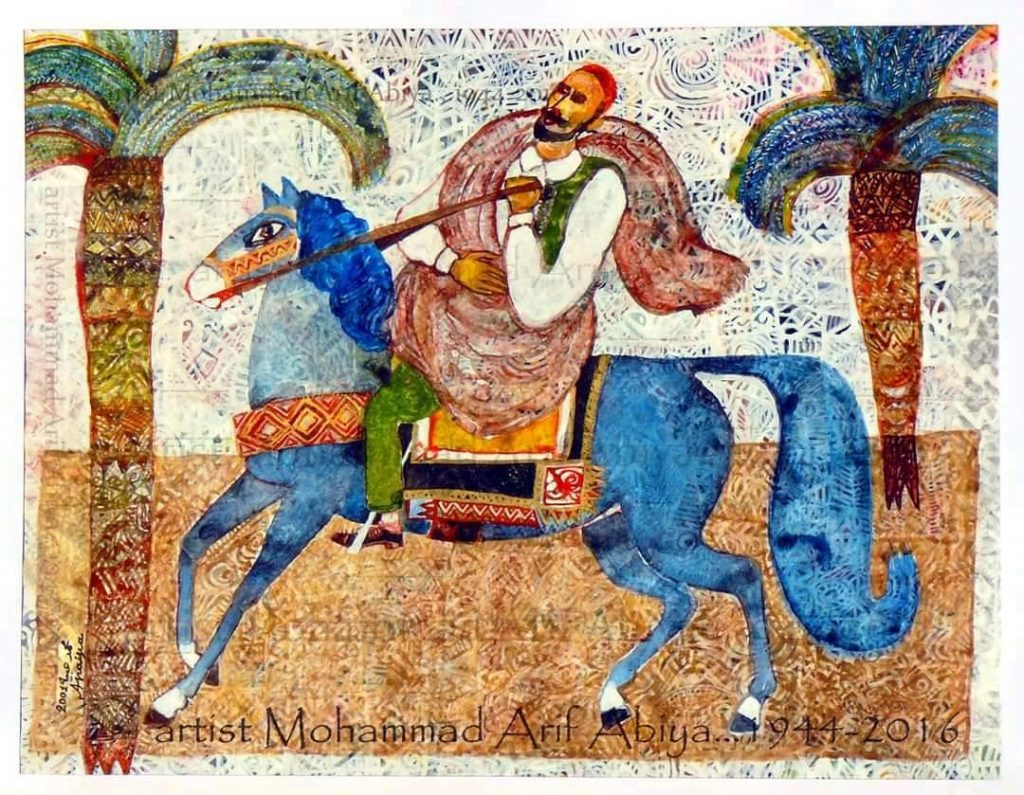
Through his artwork, he managed to reveal the depths and secrets of the visual reality. He presented it through popular visual vocabulary such as the shapes of knights, houses, trees, and women. When all combined, it creates a very harmonious. From a brightly colored aesthetic context that gives the recipient a sense of harmony and joy of simplicity and spontaneity.


Abiya participated in many local and international exhibitions. He shared the memories and realities of Libyan culture. For example, henna and traditional attire. Also, the details of Libya’s buildings and homes, such as windows and doors, courtyards, and arches. Stories illustrated in his style, in the style of grandmothers’ narration in novels, allow you to visit another dimension. Regardless, Abiya continued to paint and create art. In 2016, he passed away, leaving behind a rich artistic heritage for generations to come.